RSS

Tag Archives: internet of things

Business Transformation – Turning Digital Thinking into Digital Reality

Business Transformation – Turning Digital Thinking into Digital Reality

The digital revolution is here – it is essential for organisational survival, and is now a natural expectation of staff, customers, managers, boards and industry partners.   Failure to embrace digital disruption will ultimately result in significant impacts to organisational efficiencies (at best), or will ultimately lead to organisational demise (at worst).

Organisations are using technologies like social media, mobile, analytics and embedded devices to change their customer engagement, internal operations and even their business models. Whilst there are many organisations that are realising real benefits, many organisations are left wondering how to start the journey, or how to successfully execute a digital transformation.

Based on various studies, research and personal experience, the following key practices are critical in enabling organisations to undertake successful digital transformation:


1.  Develop a Vision

Senior leaders need to have a common vision of how to proceed, and weed out the activities that run counter to that vision. They also need to understand why to change, and how the future will be better than the current situation. Without a vision of change, employees tend to do what they have been doing for years, even if it is no longer useful in the digital world. The first step is to understand the threats and opportunities that digital represents to the organisation. Will existing ways of working continue to be effective in a digital world? Are there new opportunities available in customer experience, operational processes or business models? It is also important to assess the organisations digital maturity.

Organisations must change the approach from supporting the business with information technology, to identifying what is possible with digital – starting with mobility, cloud, situational context, and then consider how to get there from here using technology as the catalyst.

2.  Invest in Digital

To realise the digital vision, organisations must invest in the right areas. This includes cutting back in unproductive areas while ramping up investment where it needs to occur. Organisations should choose to excel in a few areas based on existing capabilities such as customer experience, social media, mobile, customer analytics, process digitization or internal collaboration – but not in all.

Organisations will need to consider adapting their business model, which could include adding value to products and services, reaching new customers, linking operational and customer-facing processes in new ways, and even launching entirely new businesses. Strong governance mechanisms are also required to increase the level of coordination and sharing across silo-run digital initiatives.

3.  Organisational Engagement

When employees are engaged in a shared vision they help to make the vision a reality. They offer less resistance to change and often identify new opportunities that were not previously envisioned. It is beneficial to use a wide array of digital channels, such as broadcast, web, video, and social networks to generate continuous two-way communication at scale. Equally important is to encourage employees to identify new practices and opportunities that will advance the vision.

4.  Customer Focus

From a digital solution perspective, focus on user experience design by directly engaging with your customer base. Ask for feedback, challenge current processes, and validate effectiveness. Provision of products or services can be enhanced by engagement with the customer base to understand the demand, and include co-design, enabling greater take-up and the ability for self-service. Provide access to your products and services from anywhere, anytime and on any device, regardless of location.

5.  Cloud First

Investment in cloud based platforms can accelerate the journey to digital, providing opportunities for simplified mobile platform interfaces, use of contextually aware services (utilising customer location, preferences, usage history, etc), context sensitive data integration and data exchange among mobile, big data analytics, social media, internet of things, etc. Develop capabilities to generate forward-looking predictive analytics and overlay with open data sources to truly innovate and provide value.

6.  Sustain the Transformation

Successful digital transformation is built on a foundation of core skills and capabilities. Assess the skills on your teams to insure they fit the new platforms for digital business. Consider hiring some experienced executives who can make an impact quickly and coach existing employees. Redesign your training programs to develop skills your company needs. Where useful, partner with vendors to gain skills and cross-sector experience that complements your capabilities. Senior leaders must focus on building and sustaining momentum for change.

Quantify and monitor progress toward the digital ambition through KPIs or digital scorecards. Scorecards have power beyond just measuring the impact of major investments. They help to change the culture. A shared understanding between IT and business executives is also critical to success.


For a real-world case study (from independent research firm Gartner), please see the link below or contact me via email, linkedin, twitter or this post.
Building a Digital House: How an Industry Regulator Created an Exemplary Public-Sector Digital Service Model


Tags: , , , , ,

The Mobile eHealth Revolution

The Mobile eHealth Revolution

The mobile e-health landscape is about to be transformed. We are now embarking on an era where consumerisation will drive the proliferation of integrated mobile medical health.

There are already a staggering number of healthcare apps available to consumers, but the piece of the puzzle that will take consumerised healthcare to another level is the integration and usability of applications, systems and devices across the full spectrum of care.

Research suggests that smartphone and tablet shipments are still on the rise. Another metric on the rise relates to the number of seniors going online. In a recent article from Senior Housing News, 71% of seniors go on-line every day.  In addition, tablet ownership among seniors has risen from 2% in 2010 to 25% in 2014. According to the study, the number of seniors going online from their phone has quadrupled from 7% in 2009 to 29% in 2014.

Not only do the families of seniors want to be connected and involved in care, it’s the seniors themselves who are becoming engaged in mobile and internet connectivity.

Further to this, data published on the Intel Healthcare Innovation Barometer demonstrates that we are more ready than ever to embrace technology in monitoring and maintaining our health.  The Intel study showed that:

  • People are more willing to anonymously share their health records or genetic information than their banking information or phone records.
  • Seventy-two percent are receptive to communication technologies that allow them to remotely connect to their doctor.
  • Almost half of respondents (43 percent) globally would trust themselves to monitor their own blood pressure and other basic vitals.
  • Fifty-three percent of people say they would trust a test they personally administered as much or more than if performed by a doctor.

It’s been no secret that Samsung, WebMD, Apple and Google are all investing heavily into health. Their aim is to help consumers see all their health and wellness data in one place, and provide both platform and integration capabilities into the consumer space. The term “ubiquitous connectivity” is often used in this situation; where mobile platforms are used to integrate health data from disparate sources to provide people with a complete integrated view of their health.

The two dominant players in the mobile space are Apple (iOS) and Samsung (Android). They are both ramping up investment from a device and application perspective.  Looking first at the devices, both companies are making use of an increased number of device sensors.  The iPhone had 3 sensors in 2007 – accelerometer, proximity, ambient light. In 2013 the iPhone 5s had 5 sensors, adding a 3-axis gyro and fingerprint sensor. The Samsung Galaxy S in 2010 had 3 sensors – accelerometer, proximity and compass, whereas the 2014 Galaxy S5 has 10 sensors adding gyro, fingerprint, barometer, hall, gesture, heart rate, ambient light.

Secondly, Apple and Google are in a race to have the health and fitness platform of choice.  The Apple Health platform (HealthKit) allows apps that provide health and fitness services to share their data with the new Health app and with each other. A user’s health information is stored in a centralized and secure location and the user decides which data should be shared with your app. Independent programmers can develop additional apps to integrate with Apple Health.

In addition, Apple Health:

  • Displays personal biometric data (heart rate, calories, blood sugar, and cholesterol) from other fitness devices (eg JawBone, Glocose Meter).
  • Provides a single app that collates all the data in an easy to read dashboard.
  • Allows users to share information with doctors and other healthcare professionals.
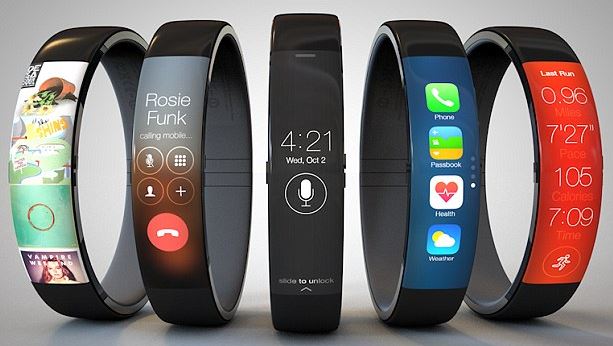
  • Enables health providers to take advantage of the sensors in iPhone 6 and the iWatch (coming soon).
  • Will soon allow apps to sync with providers electronic health care records, with the aim of seamless integration.

There is no doubt that Apple aims to be the “hub” for health care data. The Apple alliance with IBM will also lead to a significant influx of healthcare mobile apps for the iPhone and iPad.

Google has announced “Google Fit”, which is a health platform similar to Apple Health Kit that allows various apps to share health data for individual users to create a complete picture of their fitness. Whilst the open platform is soon to be released, it looks set to provide developers a single set of API’s to access and store fitness data from apps and sensors. Like Apple, this will eliminate the complexity of accessing multiple sources of information to provide a unified view of fitness activity & overall health.

With the increasing number of seniors going on line and their growing acceptance of technology to help manage and enhance health outcomes, combined with the development of platforms that bring all health data together by integrating apps, hardware and systems, we are positioned for a transformation in electronic healthcare opportunities and management.

So where does this leave us as Healthcare and IT leaders?

  • It’s time for a strategy refresh!!! People of all ages (including the older folk) are ready to embrace technology to improve and maintain their health. Ignore these trends at your own peril, and instead look to develop strategies that leverage mobile health app platforms. Depending on your situation, you may need to weigh up the benefits of building your own independent app versus building an app on an existing health platform.
  • Consider the opportunities for integrated medical records. Look at opportunities to use these mobile platforms to provide a more integrated solution that, at the end of the day, will ultimately assist the end user to view all their medical data in one place.
  • A greater number of sensors and integration points results in more data. As vast amounts of this user-generated data is collected there will be opportunities to monetize that data.
  • Telehealth, remote monitoring, telecare – Patient care will become less complex and more affordable with an increased number of devices and software able to connect and integrate seamlessly.
  • Issues around security, privacy, consent and ethics still need to be considered.

For more information, please feel free to contact me.

iwatch


1 Comment

Posted by on August 21, 2014 in e-health, mobility, strategy


Tags: , , , , , , , , , , , , , , , , , , ,

Key Strategic Considerations for 2014/15

Arguably the three key players in the global ICT research and analytics space are Gartner, Forrester and IDC. These three companies undertake vast amounts of research and analysis pertaining to current and future trends and predictions for ICT and business environments. Throughout the course of any given year, these well respected organisations release their analysis, insights and predictions that every organisation should consider as part of their strategy and planning.

In evaluating and cross referencing the publically available information that has been released from these key players over the last 12 months, there are four high level overlapping themes that emerge which are common across all three organisations.

These are:

  • Cloud
  • Internet of Things (everything)
  • Big Data
  • Mobility

Whilst these themes are high level and of little surprise to many, they provide insight into technologies and strategies that every organisation should consider when undertaking technology research, planning and innovation initiatives. The following content provides some snippets of these key themes…


1.  Cloud

Gartner

  • “Enterprises should look to model themselves off of the cloud leaders Amazon, Google & Salesforce. IT organizations should align with and emulate the processes, architectures, and practices of these leading cloud providers.”

Forrester

  • “Public Cloud will be the default backbone for the Internet of Things”.
  • Forrester predicts that Software as a Service will become the new de-facto for buying new applications.

IDC

  • The worldwide revenue from public IT cloud services grew four times more than predicted.
  • “By 2015, one of every seven dollars spent on packaged software, server and storage offerings will be through the Public Cloud”.


2. Internet of Things (everything)

Gartner

  • “The Internet is expanding into enterprise assets and consumer items such as cars and televisions. The so called “Internet of Things” will be succeeded by the “Internet of Everything.”

Forrester

  • “Sensors & devices will draw ecosystems together”.
  • “The Internet-of-Things will move from hype to reality with the ubiquity of connectivity and proliferation of devices, and wearable computing will go from niche to broader use”.

IDC

  • “The global Internet of Things market is expected to grow by more than $5 trillion over the next six years”.
  • IDC research predicts “that the global IoT market would hit $7.1 trillion by 2020, as people around the world – and particularly in developed nations – develop an affinity for full-time connectivity”.


3. Big Data

Gartner

  • “Big Data – information of extreme size, diversity and complexity – is everywhere and is destined to help organisations drive innovation by gaining new and faster insight into their customers.

Forrester

  • “Firms that embrace big data concepts are creating the next generation smart systems. Cheaper, more agile, collaborative, and adaptive methods for analytics and data sharing are key. Important to design “predictive apps able to sense their environment and respond in real-time, anticipate user action, and meet users in their moment of need.
    • Mobile contextual data will offer deep customer insights and is a key driver of big data.

IDC

  • IDC expects the Big Data technology and services market to achieve a compound annual growth rate of 39.4%, or about 7 x the overall ICT market.


4. Mobility

Gartner

  • For mobile application environments, Gartner for 2014 predicts the future lies in HTML5 and the browser .
  • With more users wanting to work across multiple devices, Gartner recommend app developers work to create “building blocks” that can be assembled to fit the needs of different devices.
  • Gartner predicts there will be more popularity in smaller, more targeted apps than more comprehensive, one-size fits all apps.

Forrester

  • Leading organisations are moving to deliver mobile, cloud and big data solutions more readily. Contextual data will offer deep customer insights and is a key driver of big data.
  • Competitive advantage in mobile will shift from experience design to big data and analytics.

IDC

  • By 2015, the worlds mobile worker population will reach 1.3 billion.
  • Nearly 1 billion smartphones will be distributed globally in 2015.
  • Predicts Windows Phone will capture the number 2 spot in market share by 2015


Some other interesting information that was released…

  • API’s will become the digital glue by providing open access to useful functionality through network-based services.
  • The smart machine era will be the most disruptive in the history of IT. This will include the proliferation of: contextually aware, intelligent personal assistants; smart advisors; global industrial systems; autonomous vehicles.
  • Gartner statistics predict 3-D printing to grow 75 percent in 2014 alone, with the number of unit shipments doubling in 2015. 3-D printing is a real, viable and cost-effective means to reduce costs through improved designs, streamlined prototyping and short-run manufacturing.

The above content provides just a fraction of the available information released by Gartner, Forrester and IDC, however when all major research companies are banging on the same drum, we should all sit up and take notice.

 
Leave a comment

Posted by on July 16, 2014 in strategy


Tags: , , , , , , , ,

The Internet of Things – The Prospects for Healthcare

The “Internet of Things” (IoT) is easy to describe, but hard to execute. According to Wikipedia, IoT is a collection of technologies that make it possible to connect things like sensors and actuators to the Internet, thereby allowing the physical world to be accessed through software. Physical objects are increasingly becoming embedded with sensors and gaining the ability to communicate.

From a more practical perspective, in “the Internet of Things” you may have sensors and actuators embedded in physical objects – from roadways to pacemakers – linked through wired and wireless networks, often using the same Internet Protocol (IP) that connects the Internet. These networks churn out huge volumes of data that flow to computers for analysis (see my blog on Big Data).

By 2020 it is estimated that 20–50 billion devices will be connected to the Internet. Many of these devices will be collecting health data or will be connected to health and medical devices in the home, the hospital or the wider environment.

The IoT will have many applications in the healthcare sector. Pill-shaped micro-cameras already traverse the human digestive tract and send back thousands of images to pinpoint sources of illness. The combination of sensors, RFID, NFC (near field communication), bluetooth, ZigBee, 6LoWPAN, WirelessHART, ISA100, WiFi will allow significantly improved measurement and monitoring methods of vital functions (temperature, blood pressure, heart rate, cholesterol levels, blood glucose etc). In addition, the sensor technology is steadily becoming available and at a lower cost and with built-in support for network connectivity and remote monitoring. Implantable wireless identifiable devices could be used to store health records, or used in emergency situations for people with physical or cognitive impairments. The IoT could potentially support the aging population by detecting the activities of daily living or monitoring social interactions using wearable and ambient sensors, monitoring chronic disease using wearable vital signs sensors, and in-body sensors. With the emergence of pattern detection and machine learning algorithms, the “things” in a client’s environment would be able to watch out and care for the client. Things can learn regular routines and raise alerts or send out notifications in anomaly situations

RFID tags will become increasingly able to ‘sense’ their environment and transmit data to many types of readers. Located in buildings, machines and commodities, they can be used for the monitoring and tracking of objects and even for issuing warnings in cases of urgency or danger

Overall, the growth and uptake of IoT will depend on advances in miniaturisation and energy-efficient electronics, advances in software acting on behalf of people, the size and nature of demand in the private sector (commerce, logistics, etc.) and the public sector (defence, health care, etc.), the effectiveness of initial waves of IoT in reducing costs/improving efficiencies, the ability of devices located indoors to receive geo-location signals, and the efficient use of spectrum.

 
4 Comments

Posted by on August 20, 2012 in e-health


Tags: , , , , ,