RSS

Tag Archives: health

eHealth in 2015 – what’s in store?

eHealth in 2015 – what’s in store?

2015 is set to be a progressive year for eHealth.  Following the momentum built up in 2014, I take a look at the top 4 predictions and eHealth “hot-spots” that deserve the attention of Healthcare strategists in 2015.


Personally Controlled Electronic Healthcare Record (PCEHR)

In 2015 expect to see substantial progress in the PCEHR and integration of clinical information. Some of the progress made in 2014 will flow on to impact providers and consumers of Healthcare in 2015. Healthcare providers in particular should already have plans in place to align with the work NEHTA is doing, and if not, get prepared now for change.

The National E-Health Transition Authority (NEHTA) will offer funding to private hospital groups to begin integrating their systems with the PCEHR. They have released the details of their Private Hospital PCEHR Rapid Implementation Program (RIP), which will contribute towards the technical requirements for uploading and viewing of clinical documents. Release five of the PCEHR will pave the way for NEHTA to work with pathology and diagnostic imaging services to enable provider information systems to send PDF pathology and diagnostic imaging report to the PCEHR.

In Aged Care, 2015 will (hopefully) see the formation of a single client record that aligns the Aged Care Gateway system and the central client record, to the PCEHR.

In Melbourne, Western Health is gearing up to enter phase two of a project to securely deliver notifications from its hospital systems directly into GP desktop practice management software through an SMD-compliant eMessaging Gateway.  This initiative, and others like it, will become more common-place in 2015.


Expanding Consumer Choice

Consumer Directed Care (CDC) is set to be more widely integrated in 2015, with a broadening of services offered under this model.  Whilst CDC within the home and community care setting will continue to develop strengthen, residential aged care looks to embrace the same model of handing control to consumers over their choice of providers.

The My Aged Care gateway website for example, could be the “virtual marketplace where consumers and providers – or demand and supply – meet”.   The quote from a speech delivered by Senator Mitch Fifield goes on to say “Trip Advisor style capacities on the My Aged Care website will develop ratings for the quality of providers and their services, according to what matters to consumers, rather than what Departments and providers think they should be”.

CDC for Residential Aged Care is good for consumers, and is currently in the mindset of policy makers.  Residential Aged Care providers would be wise to consider the impacts of this, and think about strategies to best position themselves for the years ahead.

A current challenge is how Healthcare Providers will manage the new CDC reporting requirements. From July 2015 all Home Care Packages will be delivered on a CDC basis, so there is some concern in the industry around the lack of IT capability to deliver on these reporting requirements as July 2015 approaches.


Digital Healthcare

In 2015 many facets of healthcare will increasingly be digitised. Healthcare digitisation offers many benefits around clinical workflow automation, storage savings, longevity of records, and transmission and communication of clinical information.

Fully digital hospitals promise connection, integration and digitisation of medical records, x-rays, pathology results, radiology imaging, medications, CT/MRI scans, vital signs and other health information. Digitisation also provides opportunities around big data analytics and business intelligence to gain a broader picture of patients to improve health outcomes.

Other examples of digital healthcare include: doctors using speech recognition software to translate voice instructions directly onto patient records; linking patient meal planning with allergies and conditions (eg diabetes); medication verification and stock supply; and fingerprint biometrics for clinical staff access to rooms and systems.

It is not just hospitals that will benefit from digital healthcare in 2015. In the home care space a clinically validated monitor has recently been released that allows home users to measure blood pressure and heart rate, and connect it wirelessly to a mobile app. QardioArm works with Apple’s HealthKit, which lets users access all their health and wellness information in one place. It also records irregular heart beat history to provide a reference for doctors. This is just one of many examples.

With digitisation of healthcare inevitably on the rise, appropriate management and governance within this new paradigm will be required.  One example that helps pave the way is the release of the “Clinical Images and the Use of Personal Mobile Devices” guide, which was created to assist doctors and medical students in the proper use of personal devices such as smartphones, when taking and transmitting clinical images.


Interoperability

Interoperability is essentially an expansion of the PCEHR.

In the medication management space, 2015 may be the year to directly import medication information out of the PCEHR or GP systems straight into Healthcare Providers medication management (or clinical) system.   From a hospital perspective, work needs to be done to address the challenges faced by interoperability between different clinical systems, as well as the challenges in mapping the Australian Medicines Terminology (AMT) to SNOMED CT-AU.

2015 will also see the continued proliferation of wearable devices. A recent survey from Kronos indicates that 30 per cent of Australians use wearable devices in their personal lives. This adoption rate could result in a smooth transition to wearables for health and fitness use. Health and fitness data can be useful in doctor consultations to aid diagnostics, and in the future could be designed as medical devices and for monitoring general health and well-being.   There will be a time where the patient will upload the data and it will end up on the health professional’s screen.  It may not happen in 2015, but it will happen.

Some wearable devices that already exist include glucose meters that allow clinic alerts and remote monitoring; devices that monitor vital signs; devices and apps that allow patients to monitor their diets; and apps to help with medication compliance. Check out my blog “The Mobile eHealth Revolution” for more information.
 
Leave a comment

Posted by on December 8, 2014 in e-health, strategy


Tags: , , , , , , , , , , , , , , , , , , , , , , , , , , ,

The Mobile eHealth Revolution

The Mobile eHealth Revolution

The mobile e-health landscape is about to be transformed. We are now embarking on an era where consumerisation will drive the proliferation of integrated mobile medical health.

There are already a staggering number of healthcare apps available to consumers, but the piece of the puzzle that will take consumerised healthcare to another level is the integration and usability of applications, systems and devices across the full spectrum of care.

Research suggests that smartphone and tablet shipments are still on the rise. Another metric on the rise relates to the number of seniors going online. In a recent article from Senior Housing News, 71% of seniors go on-line every day.  In addition, tablet ownership among seniors has risen from 2% in 2010 to 25% in 2014. According to the study, the number of seniors going online from their phone has quadrupled from 7% in 2009 to 29% in 2014.

Not only do the families of seniors want to be connected and involved in care, it’s the seniors themselves who are becoming engaged in mobile and internet connectivity.

Further to this, data published on the Intel Healthcare Innovation Barometer demonstrates that we are more ready than ever to embrace technology in monitoring and maintaining our health.  The Intel study showed that:

  • People are more willing to anonymously share their health records or genetic information than their banking information or phone records.
  • Seventy-two percent are receptive to communication technologies that allow them to remotely connect to their doctor.
  • Almost half of respondents (43 percent) globally would trust themselves to monitor their own blood pressure and other basic vitals.
  • Fifty-three percent of people say they would trust a test they personally administered as much or more than if performed by a doctor.

It’s been no secret that Samsung, WebMD, Apple and Google are all investing heavily into health. Their aim is to help consumers see all their health and wellness data in one place, and provide both platform and integration capabilities into the consumer space. The term “ubiquitous connectivity” is often used in this situation; where mobile platforms are used to integrate health data from disparate sources to provide people with a complete integrated view of their health.

The two dominant players in the mobile space are Apple (iOS) and Samsung (Android). They are both ramping up investment from a device and application perspective.  Looking first at the devices, both companies are making use of an increased number of device sensors.  The iPhone had 3 sensors in 2007 – accelerometer, proximity, ambient light. In 2013 the iPhone 5s had 5 sensors, adding a 3-axis gyro and fingerprint sensor. The Samsung Galaxy S in 2010 had 3 sensors – accelerometer, proximity and compass, whereas the 2014 Galaxy S5 has 10 sensors adding gyro, fingerprint, barometer, hall, gesture, heart rate, ambient light.

Secondly, Apple and Google are in a race to have the health and fitness platform of choice.  The Apple Health platform (HealthKit) allows apps that provide health and fitness services to share their data with the new Health app and with each other. A user’s health information is stored in a centralized and secure location and the user decides which data should be shared with your app. Independent programmers can develop additional apps to integrate with Apple Health.

In addition, Apple Health:

  • Displays personal biometric data (heart rate, calories, blood sugar, and cholesterol) from other fitness devices (eg JawBone, Glocose Meter).
  • Provides a single app that collates all the data in an easy to read dashboard.
  • Allows users to share information with doctors and other healthcare professionals.
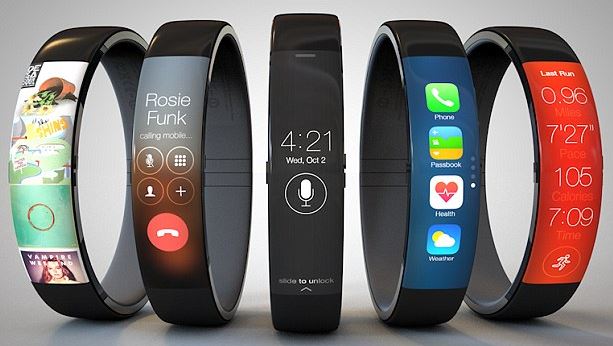
  • Enables health providers to take advantage of the sensors in iPhone 6 and the iWatch (coming soon).
  • Will soon allow apps to sync with providers electronic health care records, with the aim of seamless integration.

There is no doubt that Apple aims to be the “hub” for health care data. The Apple alliance with IBM will also lead to a significant influx of healthcare mobile apps for the iPhone and iPad.

Google has announced “Google Fit”, which is a health platform similar to Apple Health Kit that allows various apps to share health data for individual users to create a complete picture of their fitness. Whilst the open platform is soon to be released, it looks set to provide developers a single set of API’s to access and store fitness data from apps and sensors. Like Apple, this will eliminate the complexity of accessing multiple sources of information to provide a unified view of fitness activity & overall health.

With the increasing number of seniors going on line and their growing acceptance of technology to help manage and enhance health outcomes, combined with the development of platforms that bring all health data together by integrating apps, hardware and systems, we are positioned for a transformation in electronic healthcare opportunities and management.

So where does this leave us as Healthcare and IT leaders?

  • It’s time for a strategy refresh!!! People of all ages (including the older folk) are ready to embrace technology to improve and maintain their health. Ignore these trends at your own peril, and instead look to develop strategies that leverage mobile health app platforms. Depending on your situation, you may need to weigh up the benefits of building your own independent app versus building an app on an existing health platform.
  • Consider the opportunities for integrated medical records. Look at opportunities to use these mobile platforms to provide a more integrated solution that, at the end of the day, will ultimately assist the end user to view all their medical data in one place.
  • A greater number of sensors and integration points results in more data. As vast amounts of this user-generated data is collected there will be opportunities to monetize that data.
  • Telehealth, remote monitoring, telecare – Patient care will become less complex and more affordable with an increased number of devices and software able to connect and integrate seamlessly.
  • Issues around security, privacy, consent and ethics still need to be considered.

For more information, please feel free to contact me.

iwatch


1 Comment

Posted by on August 21, 2014 in e-health, mobility, strategy


Tags: , , , , , , , , , , , , , , , , , , ,

Developing an e-health strategy – top considerations

E-health is considered by many to be one of the most important revolutions in health care. E-health uses technology and telecommunications to deliver health information and services more effectively and efficiently than ever before.  E-health has enormous potential to improve service delivery, reduce costs in caring for the ageing population, and address the inequity in providing care to remote communities.

Despite this potential, the uptake of e-health is varied.  Slow adoption of e-health can be put down to:

–          Funding challenges, and governance of healthcare services

–          Resistance to changes in existing models of care

–          Lack of credible research evidence on the benefits of e-health

–          Costs and complexities associated with e-health implementation

–          The unknown impacts on practitioners and consumers

–          Concerns over privacy

These challenges can, and are, being addressed.  The Australian government has heavily invested in the National e-Health Transition Authority (NEHTA) to address integration and interoperability of health information, and are also focusing on care provision via a consumer directed care model.

For e-health managers, developing an e-health strategy in a period of significant change is an exciting but perplexing activity. Taking into account the barriers and challenges above, some of the key considerations in developing an e-health strategy are:

–          Knowing the key objectives you wish to achieve with e-healthYour e-health strategy needs to align with your organisational strategic plan, have an approved business case, and have clear purpose, goals and KPI’s. Know exactly why you are doing it, the benefits you hope to gain from it, and the key risks involved.

–          Ensuring the foundations are in placeYour e-health strategy needs to account for interoperability and integration with systems internal and external to your organisation. Ensure you take a standards approach to data and information exchange. Interoperability with referrers, service providers, hospitals, GPs, etc is critical.

–          Define the scope of e-healthE-health can mean many things to many people. Make sure you define exactly what e-health is and is not.  The definition and scope of e-health will vary from organisation to organisation, depending on capability, resources and what you are trying to achieve.

–          Getting buy-inImplementing e-health initiatives will have a much greater chance of success if you have buy-in from management, field staff and consumers/patients.  Buy-in is achieved by getting all stakeholders to be part of the e-health story, eliciting input/feedback, education and training, communicating regularly, and remaining focussed.

Whilst there are many other considerations, the above points highlight areas that are critical to e-health strategic success.  Developing and architecting the strategy to suit your organisations individual circumstances is the next step. More about that in a future post.

 
Leave a comment

Posted by on December 14, 2012 in e-health


Tags: , , , ,

e-Health and Mobility – Strategy in a Nutshell

There are some staggering statistics recently released by Forbes regarding smartphones and apps. According to Forbes (www.forbes.com) there will be 1 billion smartphones sold in 2013, which is twice the number of PC’s predicted to be sold that year.  By 2016 there will be 10 billion mobile internet devices used globally, which is 50 times the size it is today.  Between 2010 and 2011 the time spent on mobile apps began to outpace the time spent on the desktop or mobile Web.  In the same time period there was a 91% increase in the time users spent on mobile applications. By 2015, mobile application development projects targeting smartphones and tablets will out-number native PC projects by a ratio of 4-1. Between 2009 and 2014 the market for cloud-based mobile apps is projected to increase by nearly 90%.

So what does all this mean ???

The mobile revolution is well and truly here. Organisations of all sizes need to have developed a solid and robust mobile strategy, or face being left behind by clients and competitors.  Whilst there is still some contention over the best strategic approach to mobile application development, there is no doubt that mobile applications are front and centre in leveraging market opportunities, client engagement, process efficiencies, and strategic innovation.

In a recent blog post I proposed the inclusion of a Mobile Enterprise Application Platform (or MEAP) as an integral part of any mobile strategy. Of course, this particular strategy depends on the nature of the organisation and its key mobility objectives; however MEAP should not be overlooked when considering a long term view to deployment of multiple different mobile applications, using multiple back-end systems, across any device.

For medium to large sized healthcare organisations, a MEAP based mobile strategy has several advantages over a natively developed application, which is often built with a pre-defined range of objectives, or based on one back-end system.  In this scenario, a mobile platform approach is superior because it:

–          Enables the organisation to customise a solution into fit exact requirements, tailored to the business needs and processes

–          Can provide a competitive advantage, as no one else has that particular mobile application

–          Ensures that changes to the mobile solution are immediate, flexible and more cost effective

–          Is not restricted by the type of mobile device. Mobile platform applications built using HTML5 ensure availability on any mobile device

–          Aligns to organisational “bring your own device” policies (if applicable)

–          Ensures that any development code (apps or API’s) can be re-used to help build other apps

–          Fits into the organisations long term strategies and e-health vision to provide mobile solutions for other uses, for example

      • Bedside medication management
      • Bedside electronic progress notes and electronic care planning
      • Capturing of client and staff incidents, risks, compliance and improvement initiatives
      • Mobile business intelligence and analytics
      • Mobile clinical assessments
      • Information management (eg, mobile access to policies or corporate documents)
      • Others ???

The above examples are likely to need data integrated from multiple in-house systems, which plays into the hands of a mobile platform. While organisations may not require mobility solutions for all the above examples right now, establishing a mobile platform caters for immediate AND long-term organisational use of mobility, even if the future state is not known.  The mobility platform approach has already harnessed recognition across all the major ICT industry research groups including Gartner and Forrester, and is a key component of the ICT Strategy toolkit.

 
4 Comments

Posted by on November 30, 2012 in e-health, mobility


Tags: , , , , , , , , , , , , ,

The Internet of Things – The Prospects for Healthcare

The “Internet of Things” (IoT) is easy to describe, but hard to execute. According to Wikipedia, IoT is a collection of technologies that make it possible to connect things like sensors and actuators to the Internet, thereby allowing the physical world to be accessed through software. Physical objects are increasingly becoming embedded with sensors and gaining the ability to communicate.

From a more practical perspective, in “the Internet of Things” you may have sensors and actuators embedded in physical objects – from roadways to pacemakers – linked through wired and wireless networks, often using the same Internet Protocol (IP) that connects the Internet. These networks churn out huge volumes of data that flow to computers for analysis (see my blog on Big Data).

By 2020 it is estimated that 20–50 billion devices will be connected to the Internet. Many of these devices will be collecting health data or will be connected to health and medical devices in the home, the hospital or the wider environment.

The IoT will have many applications in the healthcare sector. Pill-shaped micro-cameras already traverse the human digestive tract and send back thousands of images to pinpoint sources of illness. The combination of sensors, RFID, NFC (near field communication), bluetooth, ZigBee, 6LoWPAN, WirelessHART, ISA100, WiFi will allow significantly improved measurement and monitoring methods of vital functions (temperature, blood pressure, heart rate, cholesterol levels, blood glucose etc). In addition, the sensor technology is steadily becoming available and at a lower cost and with built-in support for network connectivity and remote monitoring. Implantable wireless identifiable devices could be used to store health records, or used in emergency situations for people with physical or cognitive impairments. The IoT could potentially support the aging population by detecting the activities of daily living or monitoring social interactions using wearable and ambient sensors, monitoring chronic disease using wearable vital signs sensors, and in-body sensors. With the emergence of pattern detection and machine learning algorithms, the “things” in a client’s environment would be able to watch out and care for the client. Things can learn regular routines and raise alerts or send out notifications in anomaly situations

RFID tags will become increasingly able to ‘sense’ their environment and transmit data to many types of readers. Located in buildings, machines and commodities, they can be used for the monitoring and tracking of objects and even for issuing warnings in cases of urgency or danger

Overall, the growth and uptake of IoT will depend on advances in miniaturisation and energy-efficient electronics, advances in software acting on behalf of people, the size and nature of demand in the private sector (commerce, logistics, etc.) and the public sector (defence, health care, etc.), the effectiveness of initial waves of IoT in reducing costs/improving efficiencies, the ability of devices located indoors to receive geo-location signals, and the efficient use of spectrum.

 
4 Comments

Posted by on August 20, 2012 in e-health


Tags: , , , , ,

Videoconferencing in health – the need for skype

Videoconferencing and telepresence have significantly matured over the last few years. Consumers love the video/chat experience and ease-of-use that Skype brings to the table, and in the enterprise space we have familiar solutions from Microsoft and Cisco, and a plethora of other players such as Lifesize, vidyo and ooVoo steadily gaining market share.

Videoconferencing is increasingly common on smartphones and tablets with Skype, Apple Facetime, and Google Hangouts available for consumers, and  Microsoft Lync, Cisco Jabber, Citrix GoToMeeting and a handful of others available on smartphones and tablets for the enterprise. Use of video communication for consumers and business is only going to increase with the introduction of the NBN, improved cellular networks (4G), more choice and improved affordability (many are free). Our appetite for video collaboration is showing no signs of slowing.

For healthcare organisations, there are many opportunities to leverage videoconferencing to improve client outcomes, particularly now that videoconferencing solutions are well and truly mobile. A few examples…

  • Social isolation prevention –  eg, clients keeping in contact with family via skype
  • Field workers attending clients in their home – videoconferencing with colleagues or specialists to provide holistic care or get a second opinion about a particular issue
  • Remote doctor-client communications, where clients in areas with scarce medical resources receive treatment and consultations through videoconferencing.

For organisations undertaking videoconferencing initiatives, consideration must also be given to other uses of videoconferencing within the organisation, to ensure any investment is well leveraged.  A common example is videoconferencing between various branches/offices and staff, either through desktop conferencing or room-based conferencing. Delivering education or presentations to remote staff using videoconferencing tools is a common requirement. Increasingly there are requirements for videoconferencing consultations between staff and clients or colleagues, who are external to the organisation.

Whilst there are an array of choice to satisfy consumer videoconferencing requirements, and a range of good options to satisfy the enterprise, the challenge comes when emphasis is placed on the requirement for videoconferencing with those external to your organisation. This could be clients, contractors, consultants, universities, government agencies, competitors, etc.  Whether we like it or not, the best chance of videoconferencing with these entities is likely to be via Skype.  Microsoft acquired Skype in May 2011, and as of September 2011 had 663 million registered users.

Organisations wishing to satisfy all videoconferencing requirements listed above may need to consider a hybrid approach – an enterprise tool and a consumer tool(s).  The choice of enterprise solution would depend on many factors including user/business requirements, and existing investments in telephony, infrastructure and systems.  However, to accommodate the requirement to videoconference with say, a client in their home, or a colleague who is out of the office, there is no getting away from a consumer solution such as Skype, unless you are willing to talk them in to installing product x on their device, which is not always an option.

I.T. and business leaders need to consider the challenges of not only introducing consumer videoconferencing into the organisation (think security, management, support, etc), but also the challenges that a hybrid approach would bring in terms of support, licensing and maintenance. Something has to give – either the suite/scope of requirements needs to be refined, or budgets increased to accommodate the scope.

 
2 Comments

Posted by on August 13, 2012 in e-health, videoconferencing


Tags: , , , ,

Big Data Analytics – The Promise for Healthcare

According to research company IDC, data creation is occurring at record rate. In 2010 the world generated over 1ZB of data. By 2014 we will generate 7ZB a year. Much of this data explosion is the result of social media, sensors, smartphones and tablet computers.

Big data involves the extraction of value from a wide variety of large volumes of data. According to a recent McKinsey Global Institute research study, the value of big data is $300 billion annual value to the U.S. health care industry alone. This may seem somewhat ambitious, but it highlights the potential of big data analytics. Mining data from unstructured sources such as twitter feeds and internet blogs, and mashing it up with structured data can produce critical market intelligence.

One of the many new sources of data growth is the healthcare industry. The rapidly evolving healthcare environment is transitioning to electronic medical records and images, introducing sensor networks, utilising health related mobile applications, exploiting RFID tagging and consuming social media. The unstructured data available from these sources (accompanied by structured data within healthcare organisations) can provide enormous insights into fields such as public health monitoring, long-term epidemiological research programs and health trends. Furthermore, with the evolution of mobile telephony via smartphones and tablets, additional data to harvest includes geographic location, text messages, browsing history and motion (via accelerometers). Researchers have already started creating models, using data from Twitter, that enables you to see the spread of infectious diseases, such as flu, throughout a real-life population observed through online social media (http://tinyurl.com/dx8dldd).

Unfortunately, traditional business intelligence (BI) tools may struggle to keep pace with big data. Many BI tools simply are not designed to sift through this much data, or identify meaningful (versus un-meaningful) data. As the amount of data continues to increase, data discovery capabilities will become increasingly important, and existing BI tools will need to evolve to keep up.

For healthcare providers, we need to be aware of not only the potential benefits of big data, but also the challenges that big data provide. According to IDC, these challenges include:

  • Having appropriate IT infrastructure and systems that can analyse and validate high volumes of data
  • Assessing mixed data (structured and unstructured) from multiple sources
  • Dealing with unpredictable content with no apparent schema or structure
  • Enabling real-time or near-real-time collection, analysis, and answers

There is enormous promise in big data analytics, where it could yield a competitive advantage and real consumer health benefits for those willing to step up to the challenge.

 
1 Comment

Posted by on August 6, 2012 in e-health


Tags: , , ,