RSS

Author Archives: CIO/COO

Unknown's avatar

About CIO/COO

Senior Executive with more than 18 years’ diverse experience across FMCG, retail, healthcare, manufacturing, regulation and pharmaceutical industries within public companies, private sector, government and non-profit organisations.

The Internet of Things – The Prospects for Healthcare

The “Internet of Things” (IoT) is easy to describe, but hard to execute. According to Wikipedia, IoT is a collection of technologies that make it possible to connect things like sensors and actuators to the Internet, thereby allowing the physical world to be accessed through software. Physical objects are increasingly becoming embedded with sensors and gaining the ability to communicate.

From a more practical perspective, in “the Internet of Things” you may have sensors and actuators embedded in physical objects – from roadways to pacemakers – linked through wired and wireless networks, often using the same Internet Protocol (IP) that connects the Internet. These networks churn out huge volumes of data that flow to computers for analysis (see my blog on Big Data).

By 2020 it is estimated that 20–50 billion devices will be connected to the Internet. Many of these devices will be collecting health data or will be connected to health and medical devices in the home, the hospital or the wider environment.

The IoT will have many applications in the healthcare sector. Pill-shaped micro-cameras already traverse the human digestive tract and send back thousands of images to pinpoint sources of illness. The combination of sensors, RFID, NFC (near field communication), bluetooth, ZigBee, 6LoWPAN, WirelessHART, ISA100, WiFi will allow significantly improved measurement and monitoring methods of vital functions (temperature, blood pressure, heart rate, cholesterol levels, blood glucose etc). In addition, the sensor technology is steadily becoming available and at a lower cost and with built-in support for network connectivity and remote monitoring. Implantable wireless identifiable devices could be used to store health records, or used in emergency situations for people with physical or cognitive impairments. The IoT could potentially support the aging population by detecting the activities of daily living or monitoring social interactions using wearable and ambient sensors, monitoring chronic disease using wearable vital signs sensors, and in-body sensors. With the emergence of pattern detection and machine learning algorithms, the “things” in a client’s environment would be able to watch out and care for the client. Things can learn regular routines and raise alerts or send out notifications in anomaly situations

RFID tags will become increasingly able to ‘sense’ their environment and transmit data to many types of readers. Located in buildings, machines and commodities, they can be used for the monitoring and tracking of objects and even for issuing warnings in cases of urgency or danger

Overall, the growth and uptake of IoT will depend on advances in miniaturisation and energy-efficient electronics, advances in software acting on behalf of people, the size and nature of demand in the private sector (commerce, logistics, etc.) and the public sector (defence, health care, etc.), the effectiveness of initial waves of IoT in reducing costs/improving efficiencies, the ability of devices located indoors to receive geo-location signals, and the efficient use of spectrum.
 
4 Comments

Posted by on August 20, 2012 in e-health


Tags: , , , , ,

Videoconferencing in health – the need for skype

Videoconferencing and telepresence have significantly matured over the last few years. Consumers love the video/chat experience and ease-of-use that Skype brings to the table, and in the enterprise space we have familiar solutions from Microsoft and Cisco, and a plethora of other players such as Lifesize, vidyo and ooVoo steadily gaining market share.

Videoconferencing is increasingly common on smartphones and tablets with Skype, Apple Facetime, and Google Hangouts available for consumers, and  Microsoft Lync, Cisco Jabber, Citrix GoToMeeting and a handful of others available on smartphones and tablets for the enterprise. Use of video communication for consumers and business is only going to increase with the introduction of the NBN, improved cellular networks (4G), more choice and improved affordability (many are free). Our appetite for video collaboration is showing no signs of slowing.

For healthcare organisations, there are many opportunities to leverage videoconferencing to improve client outcomes, particularly now that videoconferencing solutions are well and truly mobile. A few examples…

  • Social isolation prevention –  eg, clients keeping in contact with family via skype
  • Field workers attending clients in their home – videoconferencing with colleagues or specialists to provide holistic care or get a second opinion about a particular issue
  • Remote doctor-client communications, where clients in areas with scarce medical resources receive treatment and consultations through videoconferencing.

For organisations undertaking videoconferencing initiatives, consideration must also be given to other uses of videoconferencing within the organisation, to ensure any investment is well leveraged.  A common example is videoconferencing between various branches/offices and staff, either through desktop conferencing or room-based conferencing. Delivering education or presentations to remote staff using videoconferencing tools is a common requirement. Increasingly there are requirements for videoconferencing consultations between staff and clients or colleagues, who are external to the organisation.

Whilst there are an array of choice to satisfy consumer videoconferencing requirements, and a range of good options to satisfy the enterprise, the challenge comes when emphasis is placed on the requirement for videoconferencing with those external to your organisation. This could be clients, contractors, consultants, universities, government agencies, competitors, etc.  Whether we like it or not, the best chance of videoconferencing with these entities is likely to be via Skype.  Microsoft acquired Skype in May 2011, and as of September 2011 had 663 million registered users.

Organisations wishing to satisfy all videoconferencing requirements listed above may need to consider a hybrid approach – an enterprise tool and a consumer tool(s).  The choice of enterprise solution would depend on many factors including user/business requirements, and existing investments in telephony, infrastructure and systems.  However, to accommodate the requirement to videoconference with say, a client in their home, or a colleague who is out of the office, there is no getting away from a consumer solution such as Skype, unless you are willing to talk them in to installing product x on their device, which is not always an option.

I.T. and business leaders need to consider the challenges of not only introducing consumer videoconferencing into the organisation (think security, management, support, etc), but also the challenges that a hybrid approach would bring in terms of support, licensing and maintenance. Something has to give – either the suite/scope of requirements needs to be refined, or budgets increased to accommodate the scope.

 
2 Comments

Posted by on August 13, 2012 in e-health, videoconferencing


Tags: , , , ,

Big Data Analytics – The Promise for Healthcare

According to research company IDC, data creation is occurring at record rate. In 2010 the world generated over 1ZB of data. By 2014 we will generate 7ZB a year. Much of this data explosion is the result of social media, sensors, smartphones and tablet computers.

Big data involves the extraction of value from a wide variety of large volumes of data. According to a recent McKinsey Global Institute research study, the value of big data is $300 billion annual value to the U.S. health care industry alone. This may seem somewhat ambitious, but it highlights the potential of big data analytics. Mining data from unstructured sources such as twitter feeds and internet blogs, and mashing it up with structured data can produce critical market intelligence.

One of the many new sources of data growth is the healthcare industry. The rapidly evolving healthcare environment is transitioning to electronic medical records and images, introducing sensor networks, utilising health related mobile applications, exploiting RFID tagging and consuming social media. The unstructured data available from these sources (accompanied by structured data within healthcare organisations) can provide enormous insights into fields such as public health monitoring, long-term epidemiological research programs and health trends. Furthermore, with the evolution of mobile telephony via smartphones and tablets, additional data to harvest includes geographic location, text messages, browsing history and motion (via accelerometers). Researchers have already started creating models, using data from Twitter, that enables you to see the spread of infectious diseases, such as flu, throughout a real-life population observed through online social media (http://tinyurl.com/dx8dldd).

Unfortunately, traditional business intelligence (BI) tools may struggle to keep pace with big data. Many BI tools simply are not designed to sift through this much data, or identify meaningful (versus un-meaningful) data. As the amount of data continues to increase, data discovery capabilities will become increasingly important, and existing BI tools will need to evolve to keep up.

For healthcare providers, we need to be aware of not only the potential benefits of big data, but also the challenges that big data provide. According to IDC, these challenges include:

  • Having appropriate IT infrastructure and systems that can analyse and validate high volumes of data
  • Assessing mixed data (structured and unstructured) from multiple sources
  • Dealing with unpredictable content with no apparent schema or structure
  • Enabling real-time or near-real-time collection, analysis, and answers

There is enormous promise in big data analytics, where it could yield a competitive advantage and real consumer health benefits for those willing to step up to the challenge.

 
1 Comment

Posted by on August 6, 2012 in e-health


Tags: , , ,

Consumerisation of Telehealth

According to a 2010 study by Access Economics, Telehealth is a subset of e-health that includes the application of IT and telecommunications for diagnostic and treatment services, educational and support services and the organisation and management of health services.

Looking at this wide definition, it is interesting to examine the consumerisation of telehealth, and the role being played within the mobile applications space for every-day users. According to MobiHealthNews latest report, there are more than 10,000 “medical” apps available for iPhones, Android, Blackberry, Nokia, Palm, etc. Whilst the largest group of consumer health apps are cardio fitness apps, there are also thousands more apps that fit into the “health & fitness” category that are not actually health, medical or fitness related. Despite this, the quantity of health apps for consumers is growing at a steady rate.

Popular health apps are used for counting calories, gauging nutrition, tracking workouts, calculating body mass index and quitting smoking. Our humble smartphone device offers a relatively low-cost and real-time method to assess disease, movement, images, behaviour, social interactions, and a host of other health related information. Much like the consumerisation of smartphones into businesses, there is also a gradual consumerisation of telehealth via smartphones.

There is significant further potential in using smartphones to improve the health and wellbeing of clients. Remote monitoring, at home triage services, teleconsultations, medication management, outpatient services – could all contribute to improving health related outcomes.

Unfortunately there are still many obstacles in the way that is preventing higher penetration and enhanced mobile application services to clients. Cost, usability, security, privacy all play a role, however the role of mobile apps in healthcare isn’t set to disappear any time soon, so it may pay to embrace this technology and plan it’s place in your strategy, rather than hoping for a fast exit.

 
Leave a comment

Posted by on August 2, 2012 in Uncategorized


Tags: , , , ,

Does your Mobile Strategy have MEAP ?

Significant growth is forecast in the use of Smartphones worldwide. With this growth in Smartphone use comes an increase in the consumption of mobile applications.

Many businesses have already jumped (or are in the process of jumping) onto the mobile development bandwagon to take advantage of the opportunities and innovation that mobile applications can deliver. Take Dominos Pizza for example. Dominos embraced mobile as a way to enable customers to place orders, and now has more than 30% of their orders placed online or from their smartphone app.

Failure to have a well-considered mobile strategy could make or break business, so it’s important to get it right. One consideration that is gaining momentum at the moment is Mobile Platform as a Service – or a “Mobile Enterprise Application Platform” (MEAP). The MEAP term was originally coined by Gartner, and is a serious alternative to developing bespoke mobile apps. MEAP’s offer fast development, and can be delivered across multiple platforms without the need to re-engineer code. In other words, companies can use a MEAP to develop the mobile application once and deploy it to a variety of mobile devices (including various smart phones, tablets, notebooks, handhelds etc) with no changes to the underlying business logic. This makes it easy to align with your BYOD strategy. MEAP’s can be made available in online and offline mode, and are great for organisations who wish to deploy multiple applications on a single infrastructure.

So, who should consider MEAP as part of their mobile strategy ?

Gartner developed a concept called “the rule of three”, where they encourage companies to consider the MEAP approach to mobility when they need their mobile solutions to:

  • Support three or more mobile business applications
  • Support three or more mobile operating systems (OS)
  • Integrate with at least three back-end data sources

I am currently in the process of sourcing trusted Australian based MEAP providers. If you know of any, I would greatly appreciate if you could get in touch.

 
2 Comments

Posted by on July 30, 2012 in mobility


Tags: , , , ,

Planning for e-health

With the Australian Government continuing its push towards Consumer Directed Care (CDC), it appears the move to electronic health-care records (and away from episodic/isolated client care) is inevitable.  Clients are at the centre of the Governments health strategy, and the push to CDC will provide benefits of improved accessibility, choice and flexibility for clients.

So how do e-health strategists plan for this ?

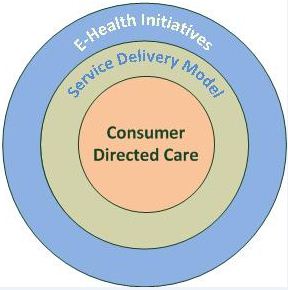
The answer, in my view, is relatively simple. With the focus on the client at the centre, organisations service delivery models need to be adjusted and realigned to reflect the CDC approach. Whilst changes to service delivery models can be a long and challenging exercise, they can (and must) be supported by various e-health initiatives to help make them a reality. (see picture)

Relationship between CDC and e-health

Some of the e-health initiatives to support CDC service delivery models may include:

  • A single electronic health record
  • Client and family internet portals
  • Clinical mobile assessments
  • E-referrals & discharge summaries
  • E-medication management
  • E-wound management
  • Telehealth, telecare & telemonitoring
  • Mobile BI & analytics

There will be many more e-health initiatives not mentioned above, however the point here is that the e-health initiatives undertaken by a service provider must in some way support the service delivery model objectives of the business, which in turn supports the shift to CDC.

Electronic health records, mobility, business intelligence and social media are changing the relationship between client and caregiver, and healthcare is moving from treating individual cases towards population health management.

 
Leave a comment

Posted by on July 25, 2012 in e-health


Tags: ,

e-health Australia – you’d be crazy not to

The Australian Government’s “Living Longer, Living Better” (LLLB) package was released on 20 April 2012 as a response to the Productivity Commission’s “Caring for Older Australians” report. While the package included $3.7 billion over five years for aged care, there are some serious implications to ongoing viability for many in the sector.

There are significant claw backs by the government in Residential Aged Care, with cuts appearing to be most heavily weighted towards high care and dementia specific facilities. Residential aged care providers most at risk are those who have taken a less than conservative approach to ACFI scoring

In the Community Care setting, from July 1st 2012 the joint State/Commonwealth Home and Community Care agreement is split into two agreements, one State and one Commonwealth. The impact on Community Care providers is significant…

  • Under the original agreement, providers would fully expend the allocated government funding in providing services to clients, and also spend some or all of the co-payments received from clients. Any left-over co-payments could be reinvested into improving service delivery.
  • Under the new agreement, any copayments that are collected would need to be expended first, followed by government funding. If there are any funds left over, the surplus would be returned to the government.

This new model allows no room for reinvesting into the organisation, and creates a tension where every provider needs to do things smarter and more efficiently than ever before.

At the forefront of every provider’s strategy should be the governments general thrust towards Consumer Directed Care (CDC). CDC is the aged care equivalent of buying online, where the aged care client (or their family) will be able to shop around via “host providers” (lets call them shopping portals), to pick and choose the services they require from a range of providers. This is an excellent result for the client, as it empowers them with choice. It also highlights my earlier point about service providers needing to do things smarter and more efficiently than ever before.

The provider landscape will soon become far more competitive, and organisations will be forced to provide a better experience for consumers, have their services more easily accessible, provide far greater transparency over costs, think creatively about avenues for revenue generation, and be extremely cost competitive. There is a significant role to play in all of this by e-health. In fact, failure to embrace e-health over the next two years has the potential to put providers out of business.

 
Leave a comment

Posted by on July 24, 2012 in e-health