With the Australian Government continuing its push towards Consumer Directed Care (CDC), it appears the move to electronic health-care records (and away from episodic/isolated client care) is inevitable. Clients are at the centre of the Governments health strategy, and the push to CDC will provide benefits of improved accessibility, choice and flexibility for clients.
So how do e-health strategists plan for this ?
The answer, in my view, is relatively simple. With the focus on the client at the centre, organisations service delivery models need to be adjusted and realigned to reflect the CDC approach. Whilst changes to service delivery models can be a long and challenging exercise, they can (and must) be supported by various e-health initiatives to help make them a reality. (see picture)
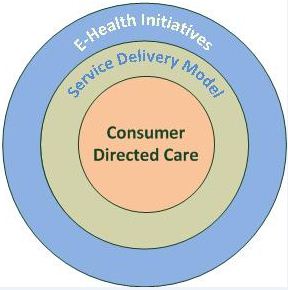
Relationship between CDC and e-health
Some of the e-health initiatives to support CDC service delivery models may include:
- A single electronic health record
- Client and family internet portals
- Clinical mobile assessments
- E-referrals & discharge summaries
- E-medication management
- E-wound management
- Telehealth, telecare & telemonitoring
- Mobile BI & analytics
There will be many more e-health initiatives not mentioned above, however the point here is that the e-health initiatives undertaken by a service provider must in some way support the service delivery model objectives of the business, which in turn supports the shift to CDC.
Electronic health records, mobility, business intelligence and social media are changing the relationship between client and caregiver, and healthcare is moving from treating individual cases towards population health management.

 Ben Ward